
Why CAD-to-ERP integration is the secret sauce for manufacturers
Why CAD-to-ERP integration is the secret sauce for manufacturers
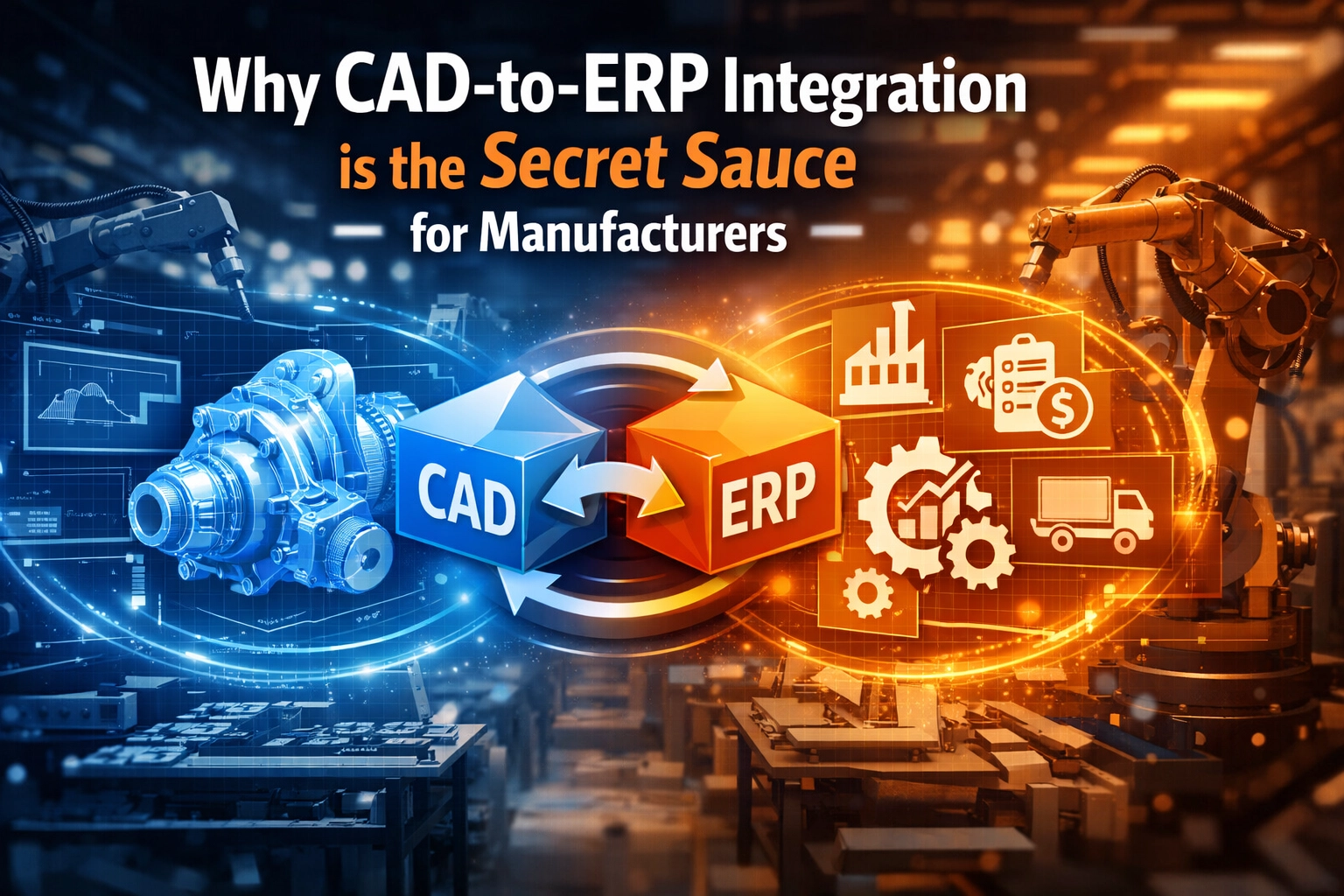
Let’s be honest: your engineers didn’t spend years getting a degree just to spend four hours a day manually typing part numbers into an ERP system. Yet, in many manufacturing plants, that’s exactly what happens. We see brilliant designers stuck in "data entry hell," copy-pasting Bill of Materials (BOM) data from Solidworks or Autodesk Inventor into a business system that feels like it was built in the nineties.
This disconnect isn't just a nuisance for your staff; it’s a massive bottleneck for your business. When your CAD data and your ERP (Enterprise Resource Planning) software don't talk to each other, you’re essentially running two separate companies that happen to share an office. One side designs the product, the other side tries to build it, and the bridge between them is a shaky mess of spreadsheets and manual emails.
At Aboni Tech, we specialize in building that bridge. We believe that cad to erp integration is the single most impactful step a manufacturer can take toward true engineering automation.
the high cost of the manual "wall"
In a traditional setup, the engineering department completes a design and "throws it over the wall" to production. This "wall" is where the errors happen. Someone in procurement or production planning has to take the engineering data and manually enter it into the ERP.
This process is ripe for disaster. A single typo in a part number can lead to thousands of dollars in incorrect material orders. A missed subassembly in the BOM can halt an entire production line for days. Beyond the errors, there's the lag. If it takes three days for a design to be processed into the ERP, that’s three days of lead time you’ve lost before you’ve even cut a single piece of metal.
By implementing a seamless integration, you eliminate the wall. You move products from engineering to the shop floor in hours, not days.
how cad to erp integration streamlines your workflow
When we talk about manufacturing process optimization, we’re talking about creating a "single source of truth." When your CAD system is integrated with your ERP, the data flows automatically. Here is how that changes your daily operations:
- Excel-free BOM management: Forget about exporting CSVs and praying they import correctly. Integration allows you to push your BOM directly from your design environment into the ERP with one click.
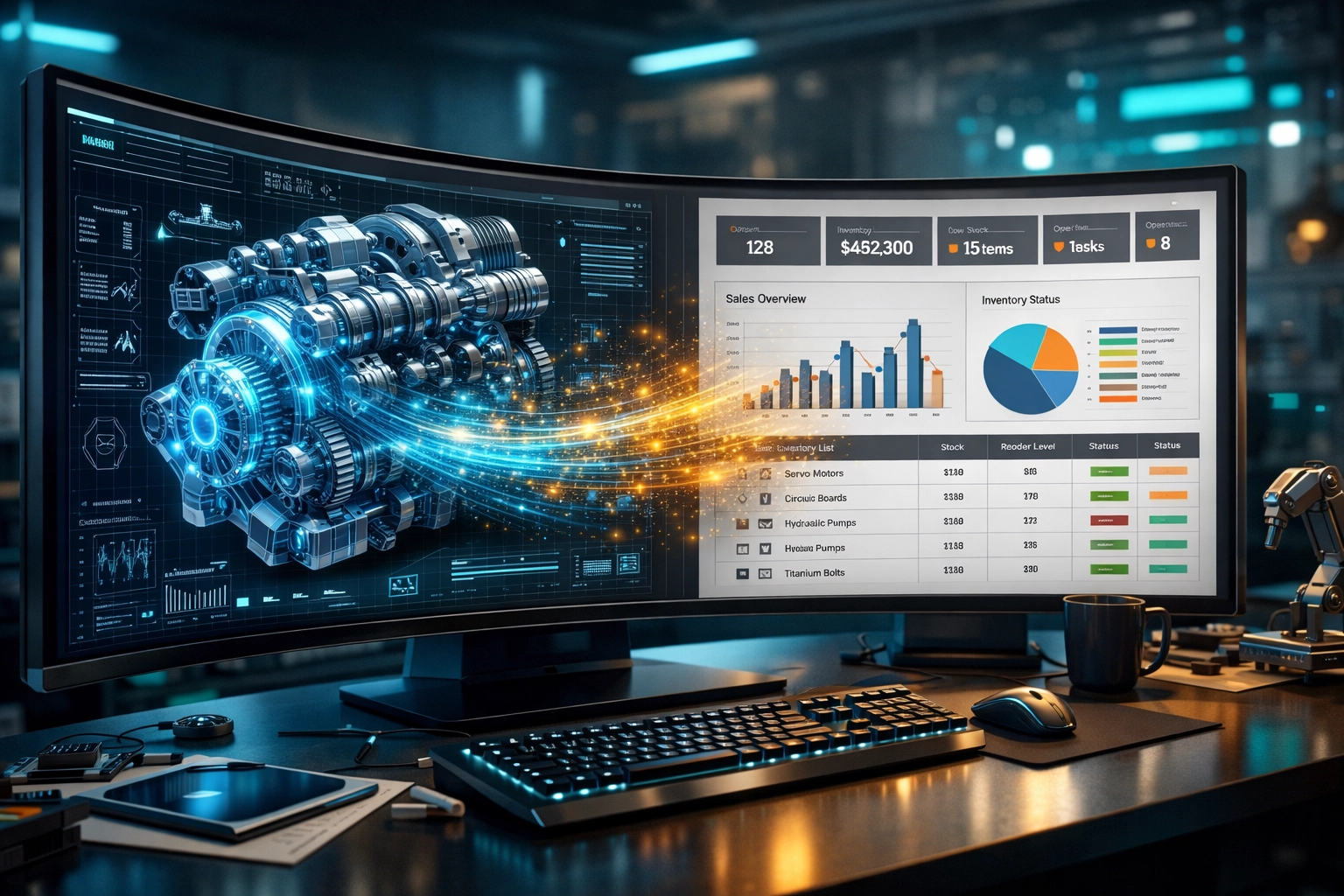
- Real-time inventory awareness: Imagine if your engineers could see current stock levels or material costs directly inside Solidworks while they are designing. They can choose parts that are already in the warehouse, saving money and reducing lead times.
- Automatic part creation: Instead of manually setting up new part numbers in the ERP, the integration can do it for you, following your specific naming conventions and business rules.
specializing in solidworks automation
Solidworks is a powerhouse for design, but its true potential is unlocked when you automate the repetitive tasks surrounding the design process. Our approach to solidworks automation goes beyond just drawing faster. We focus on how that data lives outside of the CAD file.
We help companies automate the generation of manufacturing data, everything from flat patterns for laser cutting to automated PDF creation for shop floor drawings. When this is tied into your ERP, the system knows exactly when a design is "released" and can automatically trigger procurement for long-lead items. This level of synchronization ensures that your production team is never working from an outdated revision.
elevating your shop with autodesk inventor automation
For those in the Autodesk ecosystem, autodesk inventor automation offers a similar leap in efficiency. Whether you are using iLogic to drive configurations or looking to sync complex assemblies with your ERP, the goal is the same: reduce the "non-value-added" time.
We’ve seen engineering managers reclaim up to 30% of their team’s time simply by automating the handover process. When Inventor and your ERP are in sync, the engineering team can focus on innovation and solving complex mechanical problems rather than auditing spreadsheets. It’s about letting the software do the heavy lifting of data management so your humans can do the heavy lifting of engineering.
the operational benefits you can’t ignore
If you're an IT leader or an engineering manager, you need to speak the language of ROI. CAD-to-ERP integration isn’t just a "nice-to-have" technical upgrade; it’s a strategic business move.
1. extreme error reduction
Manual data entry has an average error rate that most manufacturers would find unacceptable on the shop floor. Why accept it in the office? Integration removes the human element from the data transfer, ensuring that what was designed is exactly what gets ordered and built.
2. faster time-to-market
In today's market, speed is a competitive advantage. If you can shave two days off your pre-production cycle through engineering automation, you can deliver to your customers faster than the competition.
3. improved change management
Designs change. It's a fact of life in manufacturing. When a design is updated in CAD, an integrated system can automatically flag the ERP to update material requirements, notify procurement of changes, and even update the cost estimates. No more "oops, we built the old version" conversations.
making the transition: where to start
We know that the idea of connecting two massive software systems can feel daunting. You might be worried about "breaking" your existing workflows or dealing with a long, expensive implementation.
The key is to start with the biggest pain points. Usually, that’s the Bill of Materials. We look at your current process, identify where the friction is, and build a tailored integration that fits your specific business rules. At Aboni Tech, we don't believe in one-size-fits-all solutions. Every manufacturing floor has its own quirks, and your software should adapt to you: not the other way around.
"Moving to an automated CAD-to-ERP workflow didn't just save us time; it changed the culture of our engineering department. Our designers feel like designers again, not data entry clerks." : Engineering Manager, Industrial Equipment Manufacturer
why choose aboni tech?
We aren't just software developers; we understand the "dirt and grease" side of engineering. We know how a BOM works, we understand the importance of revision control, and we know that if the software isn't easy to use, the team won't use it.
Our expertise in both software integration and engineering automation allows us to speak both languages: the technical requirements of your IT department and the practical needs of your engineering team. We focus on:
- Facilitating seamless data flow across your entire organization.
- Connecting disparate systems to create a unified digital thread.
- Streamlining the path from a 3D model to a shipped product.

let's work together
If you’re tired of the manual grind and ready to see what your team can actually achieve when they aren't bogged down by data entry, we should talk. Whether you’re looking for solidworks automation, autodesk inventor automation, or a full-scale cad to erp integration, we have the tools and the experience to make it happen.
Reach out to us at Aboni Tech. We can’t wait to hear about your project and help you turn your engineering department into a streamlined, automated powerhouse. Let’s stop pushing paper and start pushing the boundaries of what your factory can do.
You can learn more about our services on our homepage or dive straight into a conversation by visiting our contact page.